
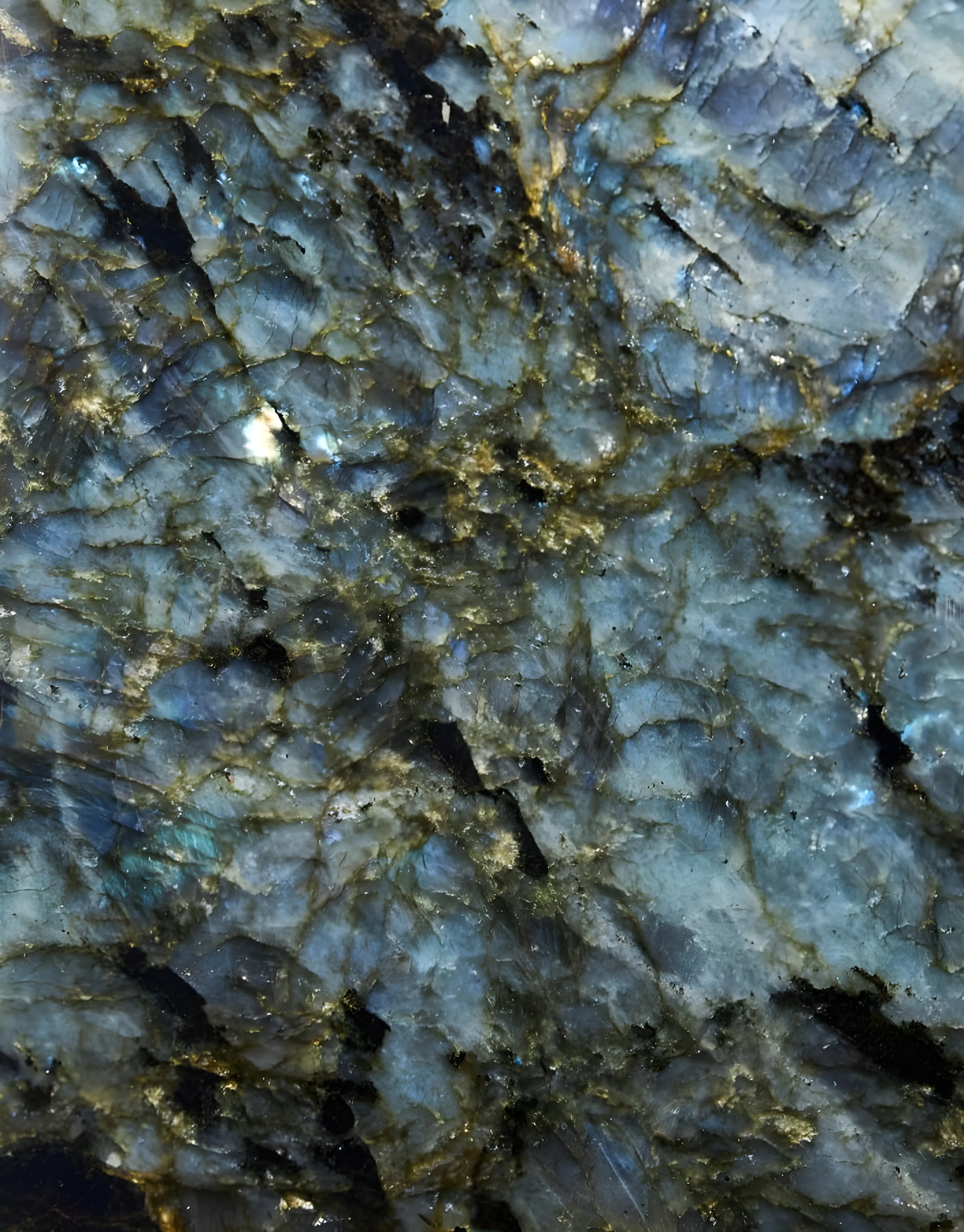
Marbles and Granites: Differences and Maintenance
How to recognize them:
Beyond their difference in composition, they can be distinguished from each other on many points.
The appearance is not the same at all.
Granite generally has small black spots in a rather uniform manner.
Marble, on the other hand, has much more diffuse veins that do not look like spots but rather like brush strokes, more or less pronounced and made lengthwise.
Furthermore, in the absence of specific finishing, marble is naturally smoother than granite.
Moreover, in general, granite is more resistant to shocks and temperature variations than marble.
Indeed, marble is more porous, which makes it relatively more fragile.
Ultimately, marble and granite are distinguished not so much by their technical characteristics, but more by their appearance.
Marbles:
The veining of marble, a unique identity
Pink, green, black, brown-veined or even golden... the veins of marble are a true imprint and its design is unique and original. They are created by the presence of calcite crystals.
They can be thin or wide, more or less present, sharp or diffuse.
This characteristic makes it a work of art in itself.
Marble can receive different finishes such as sanded, softened finish.
Let us remember that marble is a natural stone whose specificities are random.
Each slice of marble is different from the previous one when cut: color, veins, pattern... It has this uniqueness and authenticity that distinguishes it from others.
It can be used both indoors and outdoors and brings an architectural dimension and elegance to the room that hosts it.
Granite:
Granite is a rock mainly composed of quartz. It is very hard and compact, which makes it very resistant and is known for its durability.
It is possible to find granite in different colors depending on its origin. There is pink granite and black granite, but also green, blue, red and yellow.
It is commonly used outdoors, or indoors especially for kitchen countertops or bathroom vanities. It is also possible to choose granite for flooring or wall covering.
Marble maintenance:
Marble is a noble and aesthetic material. It is a limestone that has a high natural porosity. However, and contrary to what one might think, it is a relatively fragile stone that requires special care.
Indeed, some products and cleaning habits are not suitable for this natural stone and will deteriorate it.
Here are some mistakes to avoid
- Marble should never be handled with acidic products (such as vinegar or lemon).
- Avoid detergents: those found in stores are generally too acidic for marble.
- Avoid descalers: instead of cleaning the marble, they tend to leave halos on the stone.
- Never use bleach as it will irreversibly degrade the marble.
- Avoid greasy products because most of these products will have the opposite effect of what you want when cleaning marble: they will damage it by leaving marks, halos or large stains on the surface of the stone.
Our advice
- Perform daily cleaning with water.
- Use black soap or Marseille soap.
- Do not use an abrasive sponge.
- Do not use a wire brush or anything that is likely to scratch.
- To get rid of stains, use a poultice made of flour and dishwashing liquid. Let it act for a few hours by covering it with plastic wrap before rinsing it off. Wipe the marble immediately with a cloth: water can leave stains when it dries.
- If the marble surface is very dirty, use a paste made of water, mixed with a mixture of pumice stone and baking soda to remove dirt. You can also use soda crystals diluted in hot water to get perfectly clean marble.
- To make marble shine naturally, you can use baking soda added to olive oil, petroleum jelly, linseed oil or colorless beeswax.
Granite maintenance:
Granite is relatively easy to maintain because it is a very resistant and non-porous stone. To keep its shine and durability, here are the tips to follow.
Mistakes to avoid
- Abrasive products
- Acidic products
- Too alkaline cleaner
- Powerful degreaser
Our advice
- Daily cleaning with a soft cloth, lukewarm water with a little black soap.
- For greasy stains, mix baking soda with water to form a paste, apply, let it act and rinse.
- For stubborn stains, please use a specific granite cleaner with a neutral pH.